The silencing of bells marks the beginning of the Easter Triduum, the most solemn period in the Christian liturgical calendar. In many churches, after the “Gloria” at Holy Thursday Mass until the “Gloria” at Holy Saturday Mass, the altar bells are replaced by a wooden percussion instrument called a crotalus.
Also known as “clappers” or “clackers,” the crotalus is a wooden percussion instrument that produces a harsh, dry “clacking” sound. While no longer used by our sisters, several crotala are stored in the Carondelet Consolidated Archives.
The term comes from the Latin word crotalus, which is from the Greek word “krotalon” (κροταλον) and means “rattle.” Their use dates back centuries, especially in regions where metal bells were either unavailable or intentionally avoided during penitential seasons.
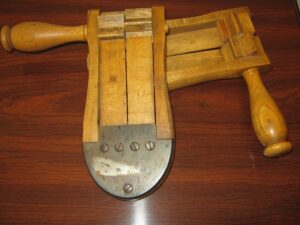
Crotalus come in different sizes and designs. They typically consist of a wooden frame with a handle and one or more hinged hammers that strike the central board when swung or rotated. Various types of crotala used in the past by the Sisters of St. Joseph of Carondelet can be found in the collections of the Carondelet Consolidated Archives.
The austere sound they make help serve as a reminder that this is not a time of celebration, but of mourning and contemplation. While not used as commonly as in the past, the crotalus still serves to draw the faithful into the emotional and spiritual landscape of Holy Week.
i was interested in the clacker, but turned off by these traditionalisy latin mass dudes